Marlene Dietrich & Queen
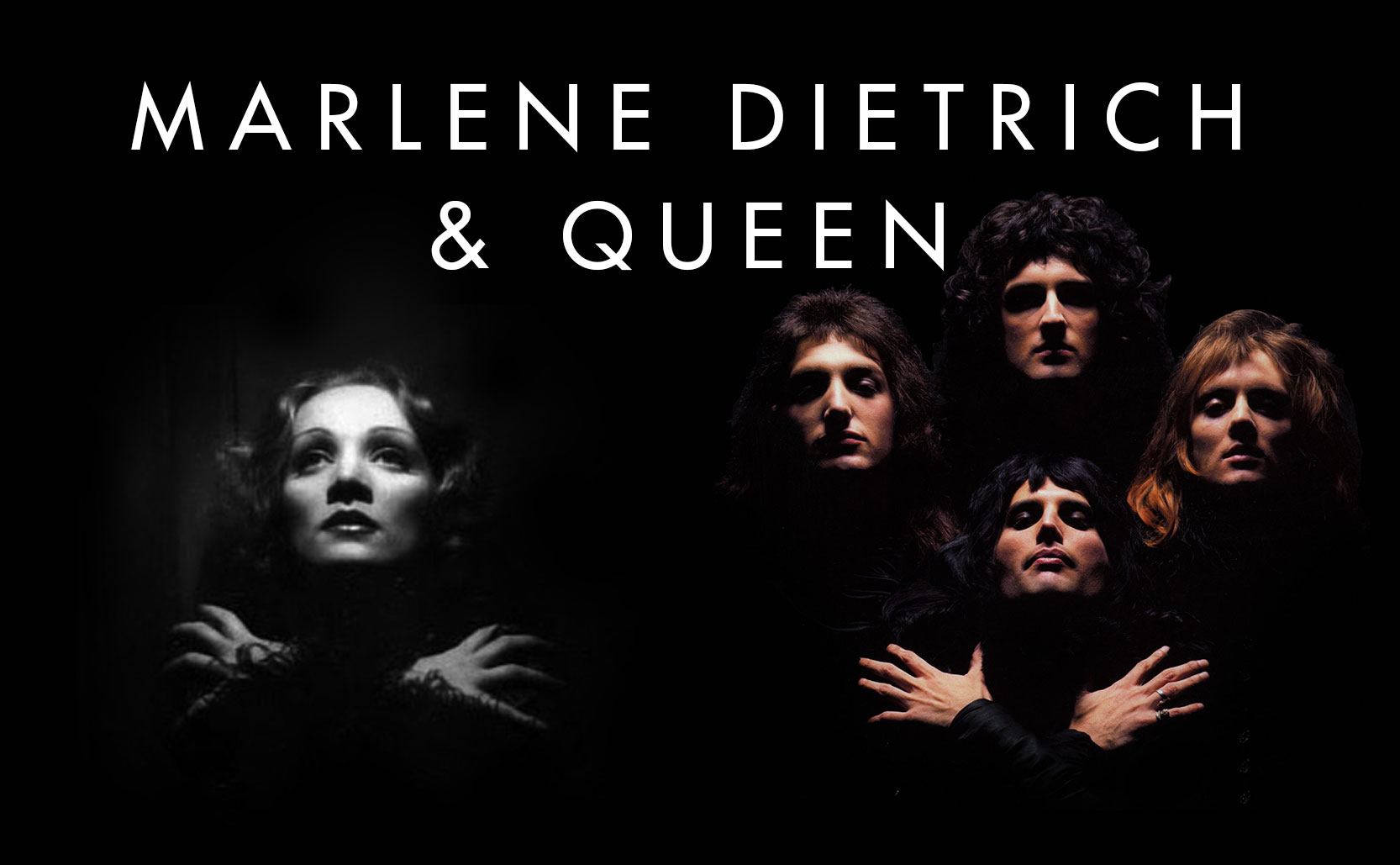
One of the most iconic photos of Queen was inspired by a photograph of Marlene Dietrich
For their second album, Queen II, Queen wanted to explore the theme of duality. This was visually explored through black and white imagery and even labeling the two sides of the album Side White and Side Black. They went to photographer Mick Rock (who had worked with David Bowie, Lou Reed, and others in the mid ‘70s glam rock scene) to photograph the album cover.
Rock had recently been shown a 1932 photograph of Marlene Dietrich from the film Shanghai Express. Dietrich was lit with a technique known as “butterfly lighting” where one of the lights is positioned in-front and above the subject, casting shadows down from the subject’s brow, cheeks, and nose (the shadow below the nose produces a butterfly looking image, hence the name). This was a technique frequently used with Dietrich to accentuate her facial features, especially in her collaborations with director Josef von Sternberg.
When Rock showed this photograph to the band, Freddy Mercury loved the idea that they could recreate it for the album cover.
“I don’t know if it was the shot itself or the idea that [Freddie] could be like Marlene Dietrich—probably a combination of the two,”
Mick Rock
This Dietrich inspired pose was used again in the music video for Queen’s greatest masterpiece Bohemian Rhapsody. The video for Bohemian Rhapsody, at over 1 billion views on YouTube, extends Marlene Dietrich’s influence even further, despite some viewers not even knowing it.