The Art Collection of Dorothy & Herbert Vogel

How an ordinary couple amassed one of the greatest art collections in history

Dorothy and Herbert Vogel began collecting art in the 1960s. Herb was a mail sorter at the post office and Dorothy was a librarian at the Brooklyn Public Library. With a passion for art they decided to live on Dorothy’s salary and use Herb’s salary (never more than $23,000 a year) to collect art. They lived frugally in a rent-controlled two room apartment in Manhattan, all the while amassing a collection of art that amounted to thousands of pieces.

Their collection is primarily modern, minimalist and conceptual art. Many of their pieces came from then lesser-known artists such as when they acquired pieces from Christo & Jeanne-Claude in exchange for taking care of the artists’ cat Gladys while they were away installing Valley Curtain in the early 1970s. The Vogels befriended many of the artists they bought from and gradually became known collectors in the art world. Chuck Close called them “the mascots of the art world.” Their collection became a who’s who of modern art.
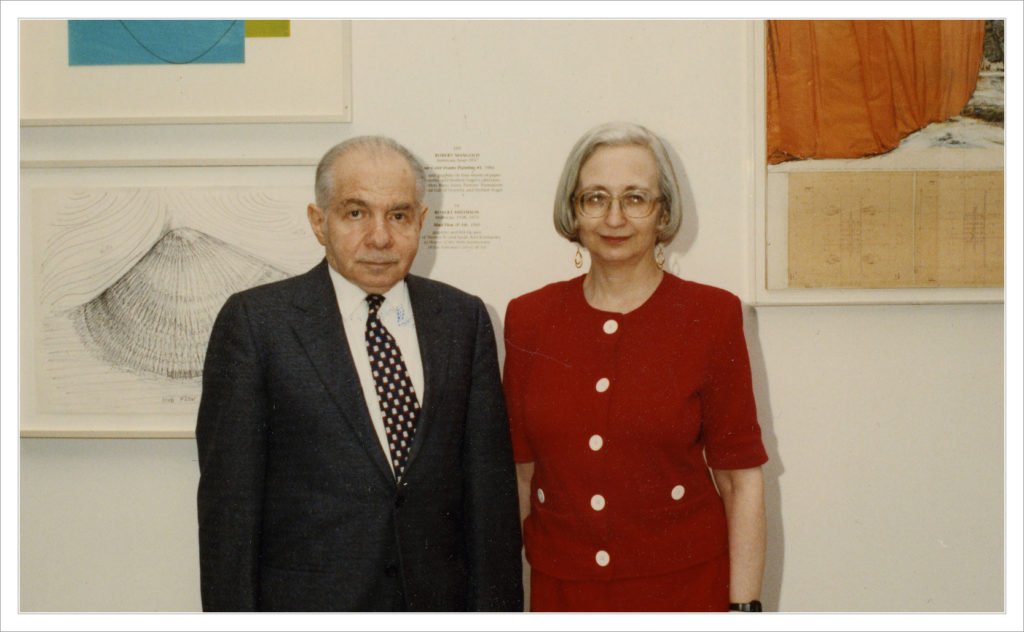
Herb and Dorothy Vogel
Some of their collection in their apartment, later in a gallery
the Vogels with Christo & Jeanne-Claude

Ultimately the Vogels collection amounted to 4,782 pieces, all crammed inside their NYC apartment with the couple, their cats, and their turtles. Dorothy insisted they never stored work in their oven, but otherwise every other space seemed to contain art. After decades in the making they decided it was time to unload their collection and invite the public to experience it so in 1992 they donated the entire collection to the National Gallery of Art in Washington D.C.. They chose the National Gallery because the museum is free to the public and never sells pieces in its collection. Similarly, the Vogels never sold any of the art in their collection, a collection conservatively estimated to be valued in the millions of dollars.

In 2008 they worked with the National Gallery and ran a program where they donated 50 pieces to a museum in each of the 50 states. The 2008 documentary Herb & Dorothy documents their world famous collection, the collection of two working class art fans who loved art for art’s sake.
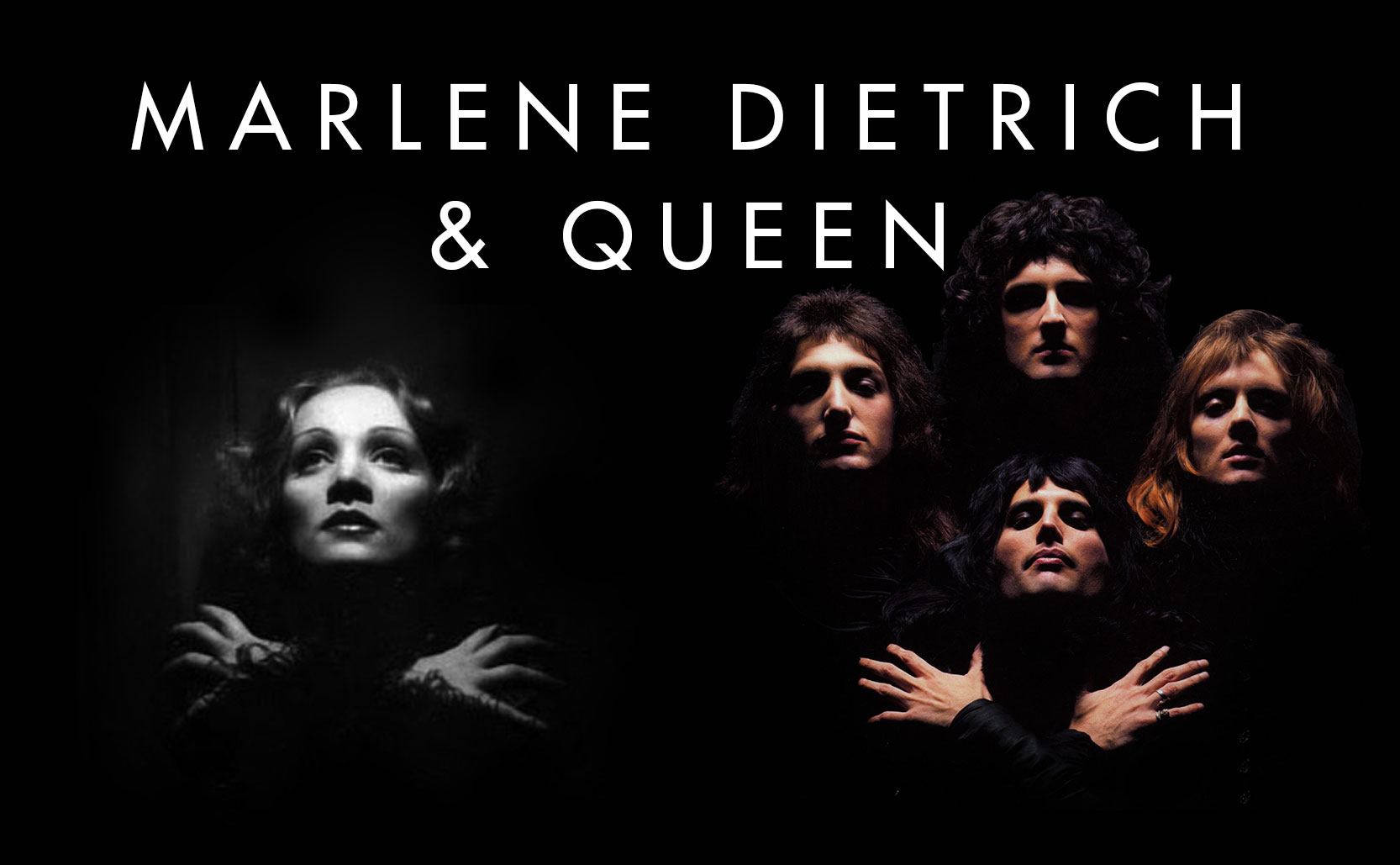
Marlene Dietrich & Queen

One of the most iconic photos of Queen was inspired by a photograph of Marlene Dietrich

For their second album, Queen II, Queen wanted to explore the theme of duality. This was visually explored through black and white imagery and even labeling the two sides of the album Side White and Side Black. They went to photographer Mick Rock (who had worked with David Bowie, Lou Reed, and others in the mid ‘70s glam rock scene) to photograph the album cover.

Rock had recently been shown a 1932 photograph of Marlene Dietrich from the film Shanghai Express. Dietrich was lit with a technique known as “butterfly lighting” where one of the lights is positioned in-front and above the subject, casting shadows down from the subject’s brow, cheeks, and nose (the shadow below the nose produces a butterfly looking image, hence the name). This was a technique frequently used with Dietrich to accentuate her facial features, especially in her collaborations with director Josef von Sternberg.

When Rock showed this photograph to the band, Freddy Mercury loved the idea that they could recreate it for the album cover.

“I don’t know if it was the shot itself or the idea that [Freddie] could be like Marlene Dietrich—probably a combination of the two,”

Mick Rock

This Dietrich inspired pose was used again in the music video for Queen’s greatest masterpiece Bohemian Rhapsody. The video for Bohemian Rhapsody, at over 1 billion views on YouTube, extends Marlene Dietrich’s influence even further, despite some viewers not even knowing it.

Moses’s Horns

Moses spent a period of time in art with horns because of a mistranslation.

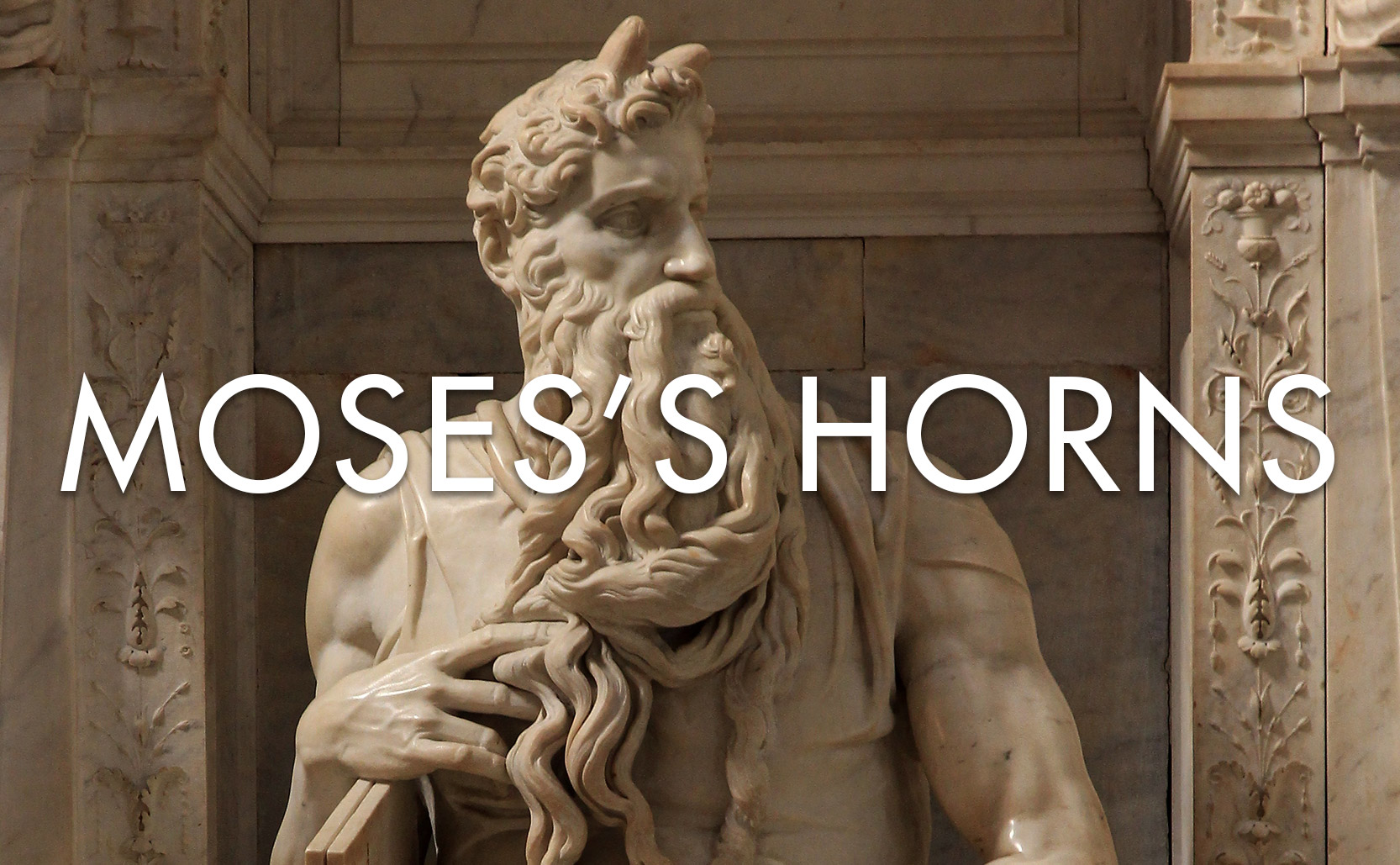
During the Middle Ages, and into the Renaissance, Moses was frequently depicted in art as having horns on his head, including in a statue by Michelangelo. This was all because of a mistranslation from the Hebrew text.

The mistranslation of Exodus 34:29 said that Moses came down from Mount Sinai and his face was “horned from the conversation of the Lord” but it should have been translated as his face was “shining/radiant from conversation of the Lord”.

So the paintings & sculptures of Moses with mutant horns should have just been Moses with a rosy glow.

A collection of Moses depicted with horns from over the centuries.