Medieval inspired typefaces still found around Ireland as throwbacks to the past.
Gaelic type, also known as Irish type, or cló Gaelach in Irish, are typefaces inspired by the handwritten insular scripts of medieval Ireland. Insular scripts and insular art are works from Ireland and Great Britain (“insular” coming from the Latin “insula” meaning “island”). This medieval style spread from Ireland and Britain to Europe by way of Irish missionaries.
You can see both Insular scripts and insular art in the illuminated manuscripts of the time, with the 9th century Book of Kells being perhaps the most famous.
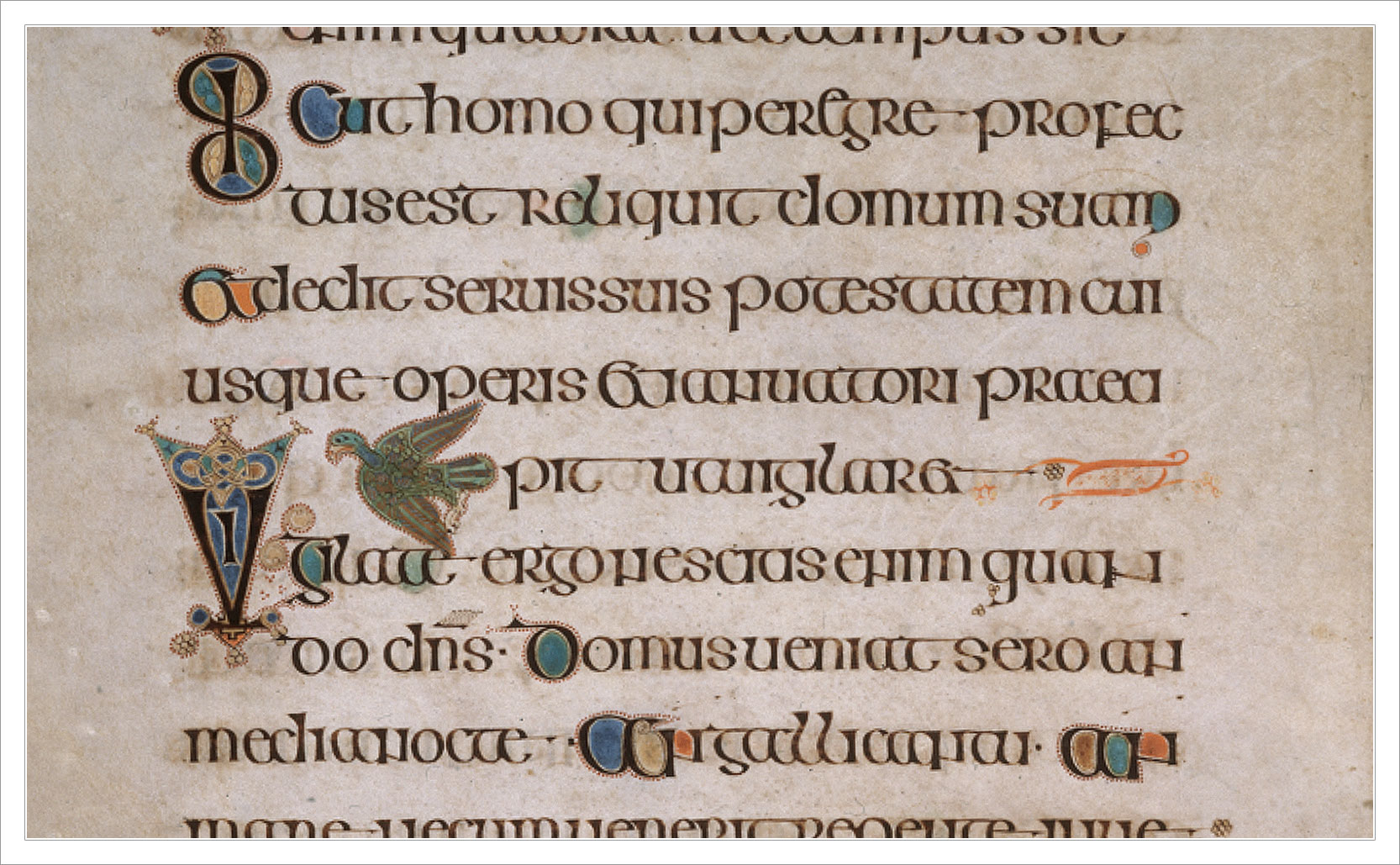
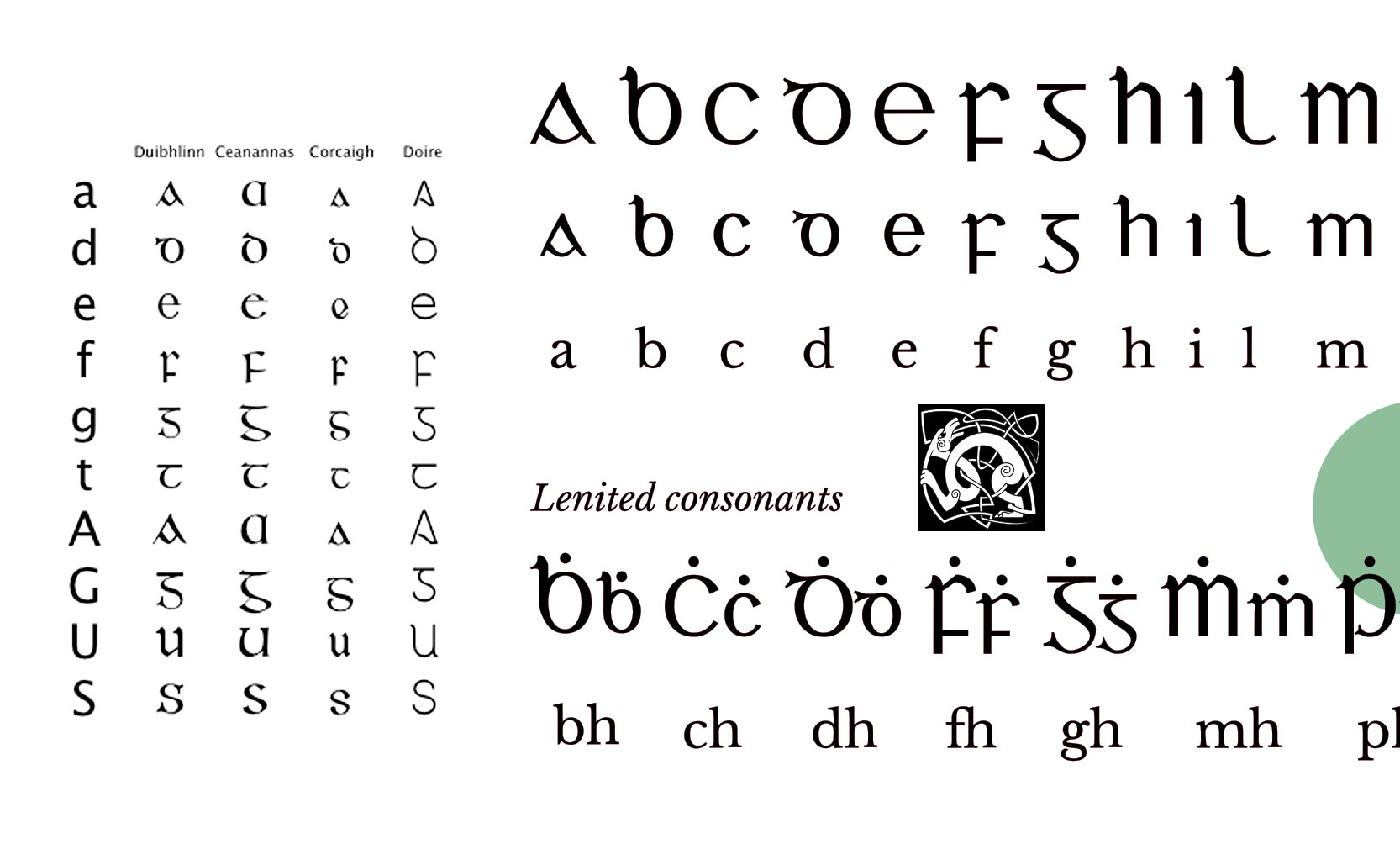
Insular script to Gaelic type
Invented in 7th century Ireland, insular scripts’ predecessors were uncial script (an all capitals style of writing) and half-uncial (a mix of capitals and lower case letter forms). What set insular apart was that its rounded letter bows were often very wide & circular, while its ascenders ended in triangular shapes. The letters “G” “D” and “T” are also markedly different from their Roman counterparts.
By the 16th century typefaces were created of the insular script styles. In 1571 the first Gaelic typeface was used for the text of a catechism, commissioned by Queen Elizabeth I, in an attempt to convert Irish Catholics to Anglicanism.
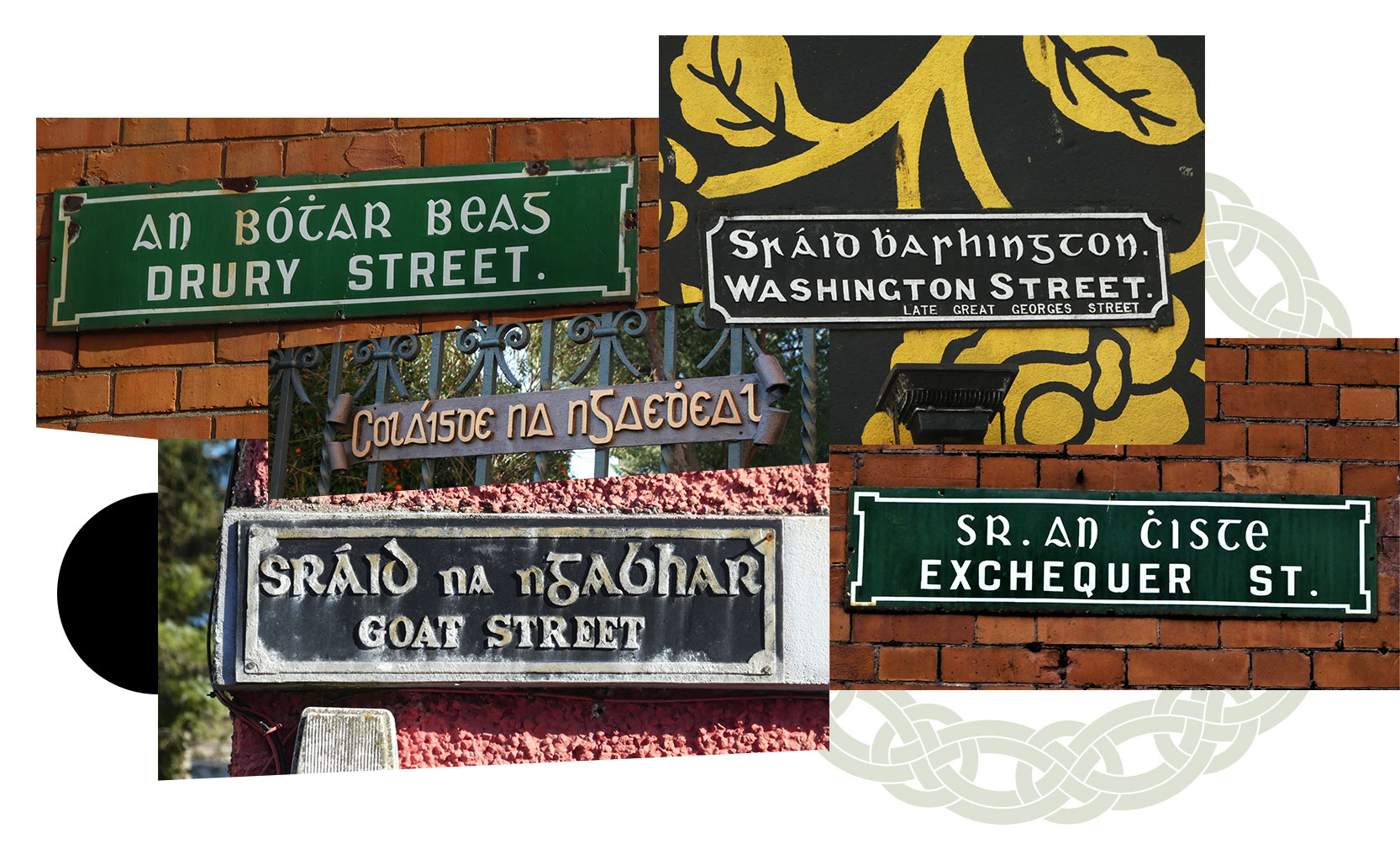
Middle ages to the middle of the 20th century
Long after most countries had moved on to Roman style typefaces, Ireland continued to use Gaelic typefaces into the 20th century. The use of Gaelic type helped reinforce the country’s unique culture and served as a subtle form of protest against the British. Bilingual street signs feature Gaelic type for the Irish name and a modern font for the English name. In Dublin the CLÓSCAPE Research Project looks to document, and hopefully preserve, these bilingual signs.
Today you can still find some bilingual signs around Ireland that feature Gaelic type. Product packaging, advertising, pub signage, and logos continue to use Gaelic type as a nod to the past with an appreciation of Irish culture.